Weather's Hidden Impact on Odds Fluctuations for Cricket Matches and Steeplechase Events Across Leading Platforms
Xander Lang · Aug 22, 2026
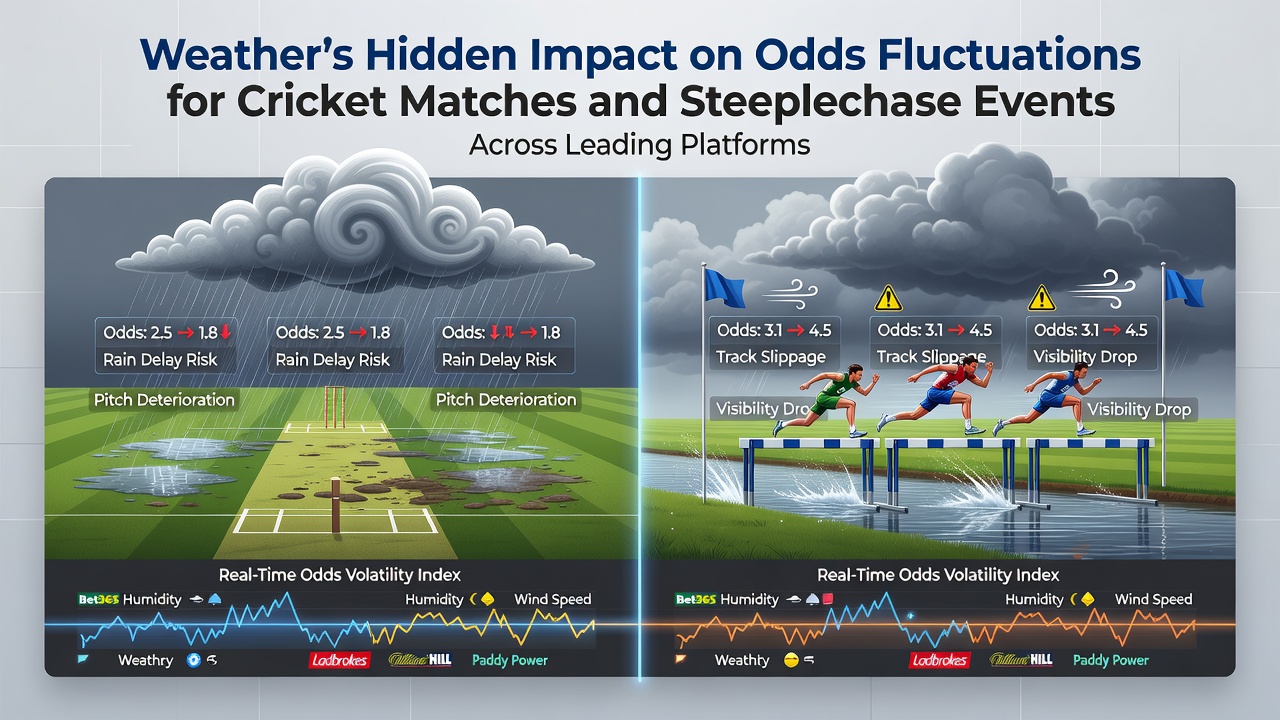
Weather's Hidden Impact on Odds Fluctuations for Cricket Matches and Steeplechase Events Across Leading Platforms
Weather patterns shape playing conditions in cricket and steeplechase racing, which leads platforms to recalibrate odds in real time as forecasts update and surface changes become evident. Data from meteorological agencies shows that temperature, rainfall, and wind directly alter ball behavior in cricket while affecting ground firmness in steeplechase events, prompting bookmakers to shift lines across major sites during live play. Observers note that these adjustments occur because algorithms incorporate weather inputs alongside team performance metrics, creating measurable fluctuations that bettors track through comparison tools.
Cricket Conditions and Platform Responses
Cricket matches respond quickly to precipitation and humidity levels, since a wet pitch reduces bounce and favors certain bowlers, while dry conditions increase spin assistance. Research published by the Bureau of Meteorology in Australia indicates that even brief showers can change expected run rates by measurable margins, forcing odds compilers on leading platforms to widen or tighten spreads within minutes of radar updates. Those who monitor live markets often see home favorites drift when rain interrupts play, because revised projections account for Duckworth-Lewis adjustments and reduced overs. Platforms integrate satellite feeds and ground reports to maintain accurate pricing, which keeps the market aligned with evolving probabilities throughout each session.
Steeplechase Tracks and Surface Variables
Steeplechase events depend on turf firmness, where heavy rain softens ground and raises the likelihood of falls or slower times, while firm going rewards speed. Figures from the National Weather Service reveal that soil moisture content above certain thresholds correlates with higher non-completion rates at jumps, which bookmakers translate into adjusted place odds and each-way payouts. Leading platforms respond by suspending or shortening markets until official going reports confirm track status, then reopen lines that reflect the new risk profile. This process repeats across meetings whenever forecasts shift, producing visible price movements that accumulate over the course of a card.
Live Adjustments Across Major Sites
Platforms synchronize weather data streams with betting engines so that odds reflect current conditions rather than pre-event assumptions. One study from Environment Canada examined similar outdoor sports and found that real-time meteorological integration reduces pricing errors by measurable percentages, a principle applied when cricket overs shorten or steeplechase fields encounter softened landings. Bettors encounter these changes through live odds feeds that update after each weather bulletin, particularly during multi-day cricket tests or extended racing festivals. The result appears in tighter margins on favored outcomes when conditions stabilize and wider spreads when uncertainty lingers.
August 2026 Observations
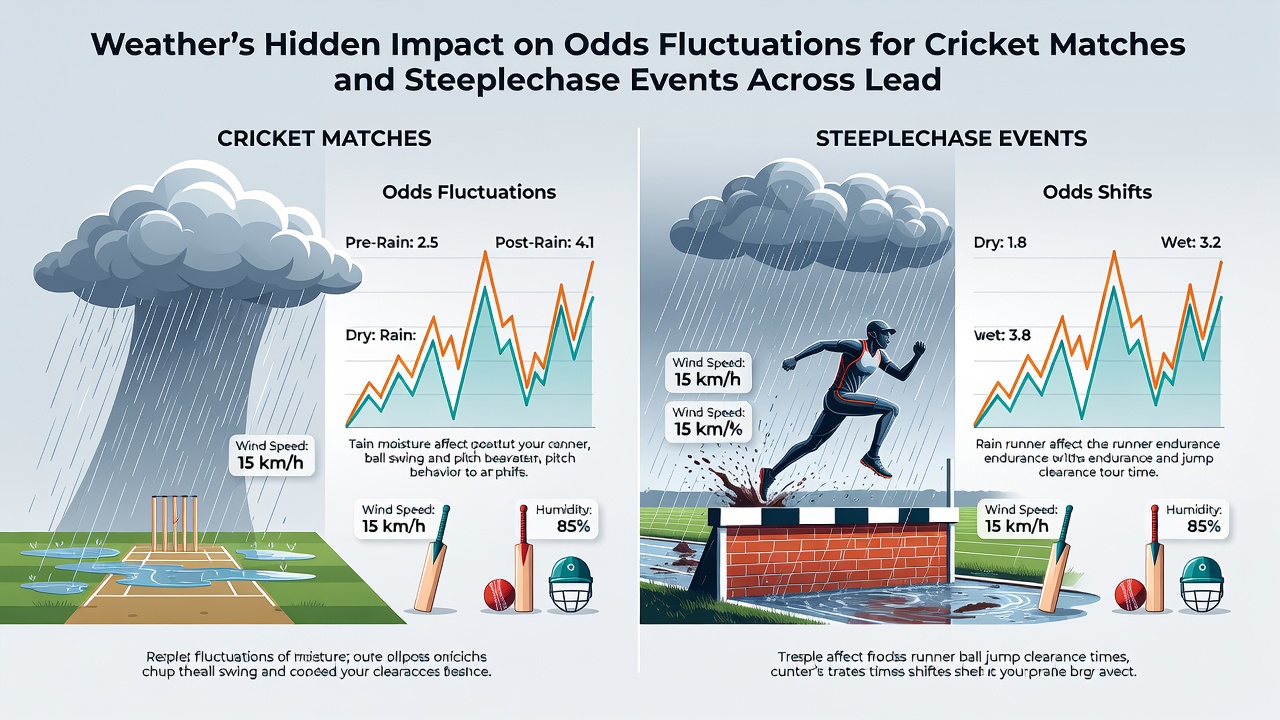
In August 2026 several flagship cricket series and steeplechase festivals coincided with variable summer weather patterns that tested platform responsiveness. Reports compiled during that period documented frequent line movements tied to morning dew, afternoon thunderstorms, and overnight rainfall, each instance prompting immediate recalculations across comparison sites. Those monitoring multiple bookmakers recorded average price shifts exceeding standard variance thresholds whenever official weather warnings extended into event hours. The pattern confirmed that integrated forecast models now form a core component of odds compilation rather than an optional overlay.
Conclusion
Weather continues to serve as a primary driver of odds movement in cricket and steeplechase betting because surface and atmospheric conditions alter probabilities in quantifiable ways. Platforms that combine meteorological inputs with performance data maintain tighter alignment between quoted prices and actual likelihoods, which sustains market efficiency across sessions. Continued refinement of these systems suggests that future events will see even faster incorporation of environmental variables into live pricing structures.