Venue Conditions and Their Impact on Market Shifts in Multi-Sport Environments
Noah Keller · Jun 20, 2026
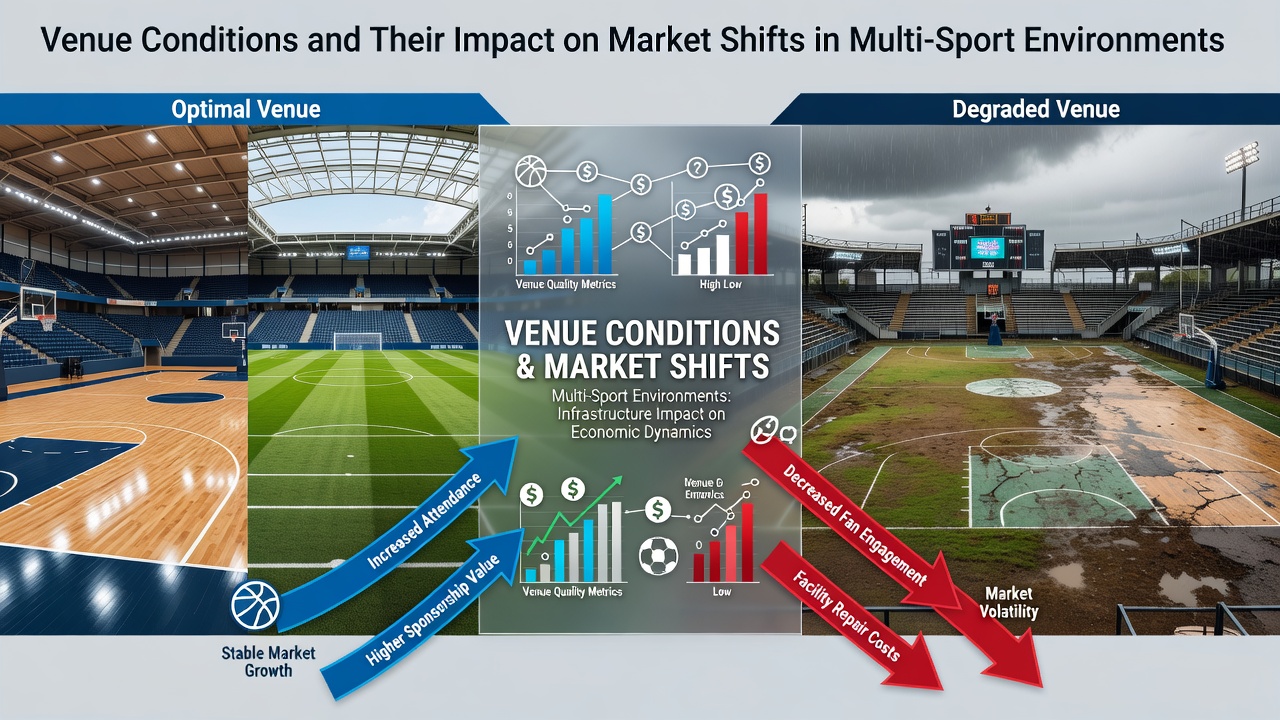
Venue Conditions and Their Impact on Market Shifts in Multi-Sport Environments
Venue conditions shape outcomes across sports in ways that ripple through betting markets and create measurable shifts in odds and trading volumes. Researchers have documented how factors like surface type, altitude, temperature, and precipitation alter player performance, which in turn prompts bookmakers to adjust lines in real time during multi-sport events. Data from international competitions shows these adjustments occur most frequently when outdoor and indoor venues operate under contrasting weather patterns on the same day.
Take cricket matches played on pitches that have received heavy overnight rain. The ball tends to swing more in the early overs, which increases the probability of early wickets and prompts markets on total runs to move lower within the first hour of play. Observers note similar patterns in tennis when humidity levels rise above 70 percent at outdoor hard-court tournaments, where serve speeds drop and rally lengths increase, shifting over/under set totals by measurable margins. Studies from sports science departments indicate these changes happen consistently enough that trading algorithms now incorporate live venue data feeds to recalibrate prices.
Weather Patterns and Their Direct Effects on Outdoor Sports
Precipitation remains the most immediate variable because it alters both playing surfaces and equipment behavior simultaneously. In football, rain-softened pitches reduce ball speed and increase the frequency of long balls, which changes expected goal totals and forces bookmakers to widen handicap spreads. Horse racing tracks that transition from firm to soft ground produce different speed figures, and data collected by racing authorities shows that favorites win at lower rates on heavy ground compared with good ground. Those statistical differences translate into rapid market movements as punters and syndicates react to updated going reports.
Wind direction and strength create additional layers of complexity at venues that host multiple codes on the same weekend. Golf tournaments and rugby matches held at coastal sites often experience crosswinds that affect shot accuracy and kicking percentages, while adjacent tennis courts shielded by stands remain relatively unaffected. Market makers respond by widening spreads on player-specific props in the exposed sports while leaving related markets in the sheltered sport more stable. Records from major events demonstrate that wind speeds above 25 kilometers per hour correlate with increased volatility in live betting volumes across those paired venues.
Surface Composition and Altitude Variations
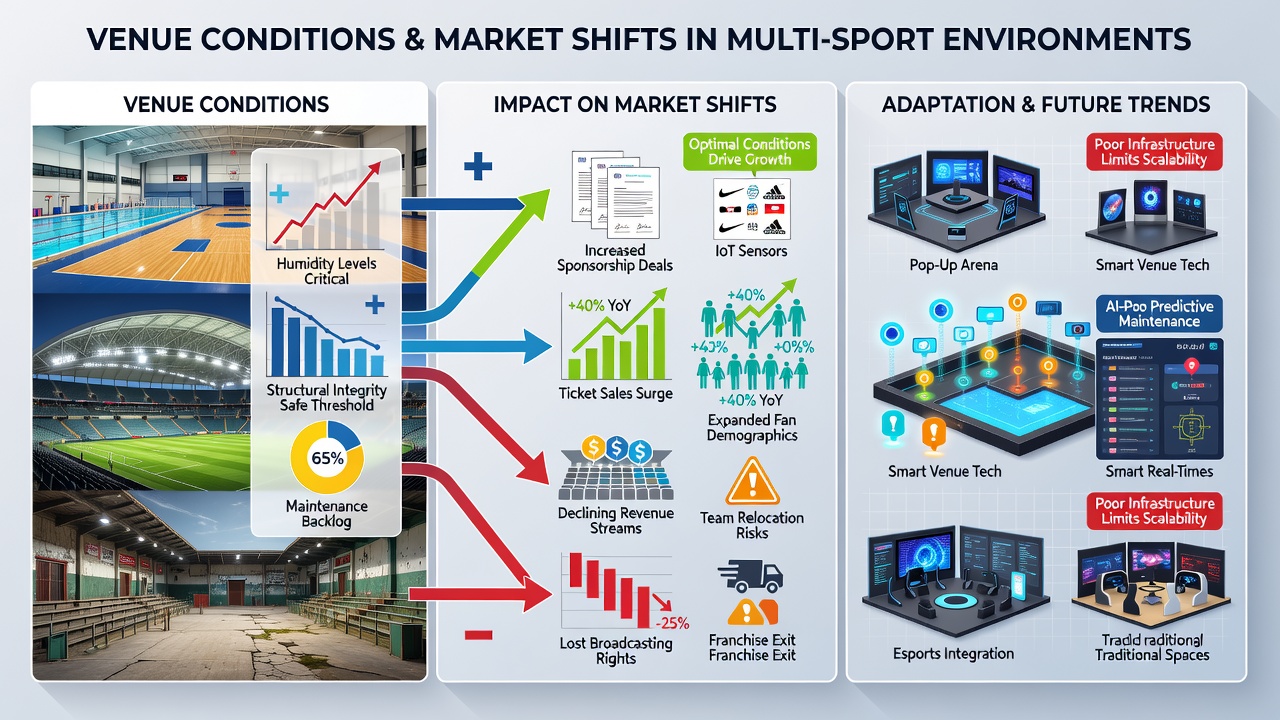
Grass, clay, and artificial turf each produce distinct movement profiles that affect scoring rates and injury risks. Basketball courts installed over concrete bases generate faster transitions than those laid on sprung wooden floors, which influences fast-break statistics and related player-performance markets. Researchers tracking European basketball leagues have recorded measurable differences in points per possession when teams switch between these floor types during the same season. Cricket grounds with varying grass cover on the square similarly shift expected boundaries and dot-ball percentages, prompting adjustments in over/under markets on total runs.
Altitude introduces another consistent variable. Venues situated above 1,500 meters reduce oxygen availability, which shortens high-intensity efforts in football and basketball while lengthening recovery times between points in tennis. Data compiled by sports medicine groups shows that teams traveling from sea-level bases to high-altitude stadiums experience a temporary drop in sprint frequency during the first half of matches. These physiological effects appear in market pricing as soon as team sheets and travel schedules become public, with handicap lines moving several points to reflect the expected performance gap.
Indoor Environmental Controls and Crowd Dynamics
Climate-controlled indoor arenas introduce different variables that still generate market movement. Temperature and humidity settings affect grip on basketballs and the speed of table-tennis balls, while air-conditioning currents in badminton halls alter shuttlecock flight paths. Technical reports from international federations confirm that small changes in these settings produce repeatable differences in rally durations and error rates. Bookmakers incorporate arena specifications into pre-event models and then fine-tune during play when real-time statistics diverge from historical norms.
Crowd density and noise levels add a psychological component. Full stadiums with reverberant acoustics increase home-team conversion rates on set pieces in football and raise free-throw percentages in basketball, according to performance-analysis databases. When venues operate at reduced capacity, those advantages shrink and markets reflect the change through adjusted totals. Events scheduled for June 2026, including early matches in the FIFA World Cup hosted across North American stadiums, will provide further data points on how temporary seating expansions and climate variations interact with these dynamics.
Market Response Mechanisms Across Sports
Bookmakers employ multi-sport risk teams that monitor venue feeds alongside statistical models. When conditions deviate from forecast, algorithms recalculate probabilities and push revised odds to trading platforms within minutes. This process occurs simultaneously across football, tennis, basketball, and cricket when those sports share a tournament complex or a regional schedule. Trading volumes spike during these periods because informed participants recognize the window between condition changes and full market adjustment.
Regulatory bodies in different jurisdictions track these movements to ensure pricing remains consistent with available information. The Australian Competition and Consumer Commission has published guidance on disclosure requirements for live data sources, while the National Collegiate Athletic Association in the United States maintains records of venue-related performance variances used by member institutions. These frameworks help maintain orderly markets when multiple sports operate under shifting conditions at the same location.
Conclusion
Venue conditions function as measurable inputs that drive systematic shifts in multi-sport betting markets. Surface, weather, altitude, and environmental controls each produce documented changes in performance metrics, and market operators respond by updating prices across related events. Continued collection of granular venue data supports increasingly precise adjustments, particularly as events scheduled for 2026 introduce new combinations of stadiums and climates. The patterns observed in existing competitions indicate that these factors will remain central to how markets process information in real time.