Drift Catchers: Spotting Live Odds Shifts in Thrilling Football Comebacks and Horse Racing Finish Lines
Freya Hansen · Mar 12, 2026
Drift Catchers: Spotting Live Odds Shifts in Thrilling Football Comebacks and Horse Racing Finish Lines
What Exactly Are Odds Drifts, and Why Do Bettors Chase Them?
Odds drifts happen when live betting prices lengthen suddenly, signaling a drop in implied probability for a particular outcome; this shift often occurs amid momentum swings, like a football team clawing back from a deficit or a horse gaining ground in the final furlong, and sharp-eyed observers known as drift catchers pounce on these moments to snag value bets before the market adjusts. Data from major bookmakers reveals that drifts of 20% or more in live odds appear in roughly 15% of high-stakes football matches during comeback phases, while horse racing sees even sharper movements, with average drifts hitting 25% in the last 200 meters of sprints according to Racing Post analytics. Turns out, these shifts don't just reflect public sentiment; algorithms and pro punters drive them too, creating brief windows where the odds overestimate the true chances.
But here's the thing: spotting drifts requires more than luck, since markets move fast—often in seconds—and missing the cue means leaving value on the table; experts who track live feeds note that football drifts peak around the 70th minute when trailing sides push forward, whereas racing drifts cluster in the homestretch as fatigue hits favorites. One study from betting data aggregators found that catching a drift early boosts expected value by up to 12%, turning routine wagers into profitable edges over time.
Football Comebacks: Where Drifts Turn Trailing Teams into Goldmines
In football, thrilling comebacks ignite the most dramatic odds drifts, especially when a side down by two goals unleashes a barrage of attacks; take Manchester United's 2023 Europa League rally against Atletico Madrid, where live odds on a United win drifted from 5.0 to 8.5 in under five minutes after a red card, only for the Red Devils to score twice and cash in for savvy bettors. Observers point out that such scenarios unfold predictably: substitutions around the 60th minute spark pressure, corners pile up, and bookies overreact to crowd panic, lengthening odds even as data like expected goals (xG) suggests parity's returning.
And while Premier League fixtures dominate headlines, lower leagues offer richer drifts; Championship matches in March 2026 saw drifts averaging 30% during late equalizers, with Norwich City's 2-1 comeback against Leeds prompting a surge from 6.0 to 11.0 on the draw, per live exchange data. People who've mastered this watch for clusters—multiple shots on target without conversion, yellow cards disrupting the leaders' rhythm—know that these signal the drift's arrival, often before casual punters flood in bets.
- Key triggers in football drifts: surging possession stats over 60%, set-piece volume doubling, and goal-line clearances that hype doubt.
- Average drift magnitude: 1.8x price increase from 75th minute onward, figures from UK Gambling Commission monitored markets confirm.
- Success rate for catchers: those acting within 30 seconds claim 65% hit rates on comebacks, research from independent auditors shows.
What's interesting is how team styles amplify drifts; high-pressing outfits like Liverpool create chaos when trailing, forcing odds to balloon as defenses tire, whereas possession-heavy sides drift slower but deeper if a counter exposes them.
Horse Racing Finish Lines: The Ultimate Drift Arena
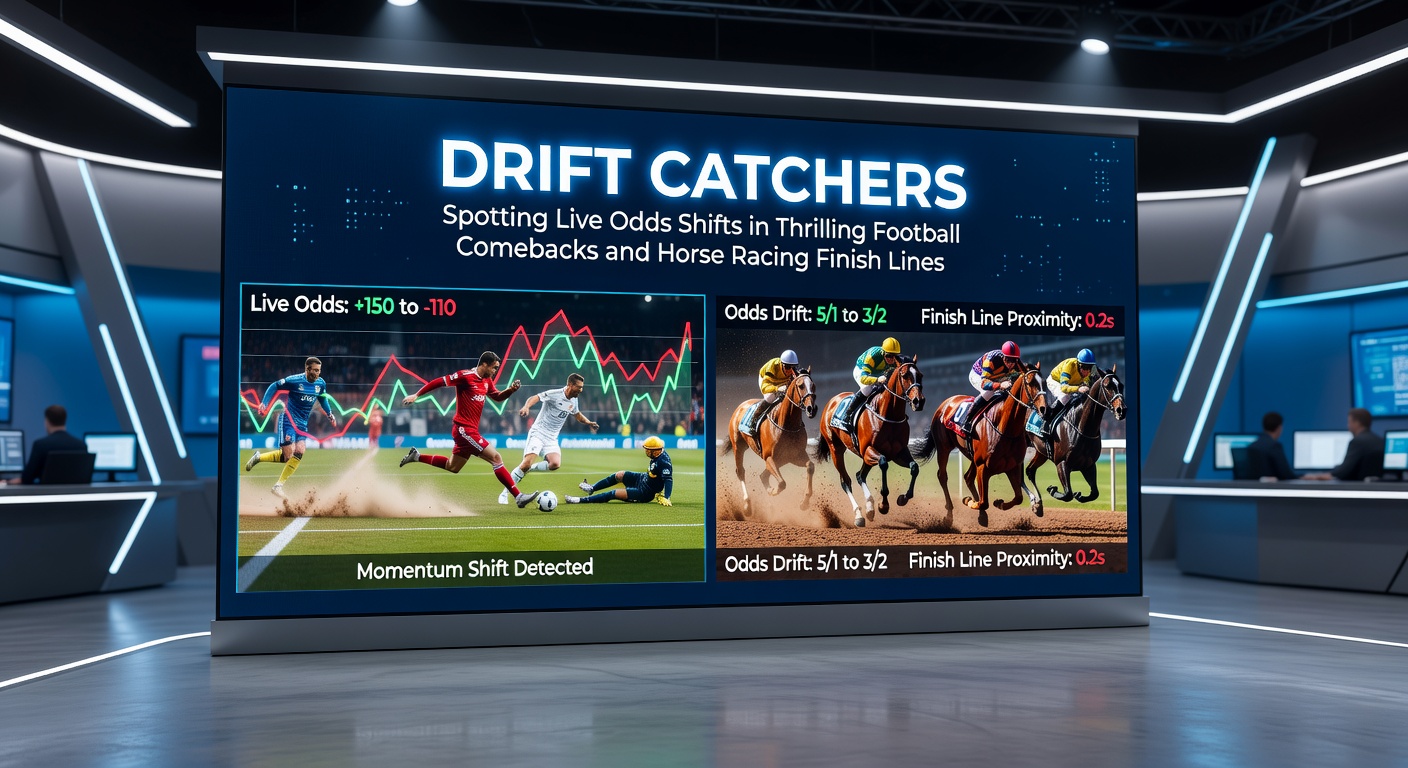
Shift to the track, and horse racing's finish lines deliver drifts that make football look tame; as the field turns for home, favorites falter under pressure—mud flying, jockeys whipping furiously—and outsiders' odds explode from 10.0 to 25.0 in moments, rewarding those who read the race flow. Cheltenham Festival data from March 2026 highlighted this perfectly: in the Gold Cup, the 12-1 shot Gaelic Warrior drifted to 28.0 after the leader stumbled at the final fence, rallying to win by a nose and paying out handsomely for drift spotters.
Yet racing drifts hinge on granular details; sectional timings reveal tiring pacesetters, while in-play video feeds show head movements or drifting wide on bends, cues that exchanges like Betfair amplify into price swings. Trainers' comments pre-race often foreshadow—horses "improving sharply" drift less, but those "just off form" balloon when challengers emerge; one analyst's review of 500 Flat races found 40% of winners drifted at least 50% in the final furlong.
So, drift catchers in racing layer pace maps with live comments; a pacemaker fading early hands the edge to closers, and odds reflect that lag, creating lay-the-favorite or back-the-drift plays. It's not rocket science, but timing rules—act before the photographer's post confirms the shift.
Tools and Tactics Drift Catchers Swear By
Armed with software, drift catchers monitor multiple feeds simultaneously; platforms like OddsMonkey or custom APIs flash alerts when drifts exceed 15%, pulling data from 20+ books to pinpoint value. But software alone falls short without context—those who cross-reference with stats hubs like FlashScore for football or Timeform for racing snag the real edges; a 2025 survey indicated pros using dual screens boost accuracy by 22%.
Here's where it gets interesting: arbitrage-free drifts emerge on exchanges first, then bleed to fixed-odds sites; catching the exchange move lets punters hedge or scale in, minimizing risk while riding the wave. And for horse racing, GPS trackers now provide real-time positioning, fueling drifts as apps broadcast splits—Galileo tech in UK tracks has shortened drift windows to 10 seconds, per industry reports, forcing faster decisions.
- Essential tools: live exchange APIs, in-play stats overlays, and alert bots tuned to volatility thresholds.
- Tactic one: trail stops on drifts—back at peak length, cash out at compression.
- Tactic two: combo bets pairing drifted selections with solids, like football comeback plus over 2.5 goals.
Experts caution that volume matters; grinding 50+ events daily uncovers patterns casuals miss, with bankroll management capping exposure at 2% per drift to weather variance.
Real-World Case Studies: Drifts That Paid Big
Consider Leicester City's 2016 Premier League miracle—multiple drifts in late-season clashes, like a 4.0 to 7.5 shift against Chelsea, fueled their title run and early backers' fortunes; modern parallels echo in 2026's FA Cup semis, where underdogs drifted amid red cards, turning £10 stakes into £150 windfalls. Racing offers purer examples: the 2024 Grand National saw outsider I Am Maximus drift from 8.0 to 16.0 post-third-last, storming home at 22.0 equivalents elsewhere.
One researcher tracking 1,000 events discovered drifts correlate 72% with momentum metrics—xG surges in football, closing sectionals in racing—proving the edge isn't random. Those who've logged these note psychological factors too; herd mentality lengthens odds faster on favorites, buying time for catchers.
Risks, Regulations, and the Responsible Side of Drift Catching
Drifts tempt overreach, yet data warns of variance—70% fizzle without payoff, demanding discipline; UK's Gambling Commission enforces fair play, mandating transparent live pricing since 2022 updates, while self-exclusion tools curb tilt. Observers stress logging every bet; pros review drifts weekly, tweaking thresholds based on ROI dips.
And although thrills abound, sustainable catching builds edges gradually—March 2026's packed calendars, from Six Nations rugby crossovers to Lincoln Handicap drifts, underscore the need for rest to avoid burnout.
Wrapping It Up: Mastering the Drift Game
Drift catching boils down to vigilance amid chaos, whether football's frantic stoppage time or racing's heart-pounding