Charting Venue Microclimates and Their Direct Influence on Line Adjustments in Football Stadia, Tennis Arenas, Basketball Courts, Racecourses, and Cricket Grounds
Xander Lang · Jun 27, 2026
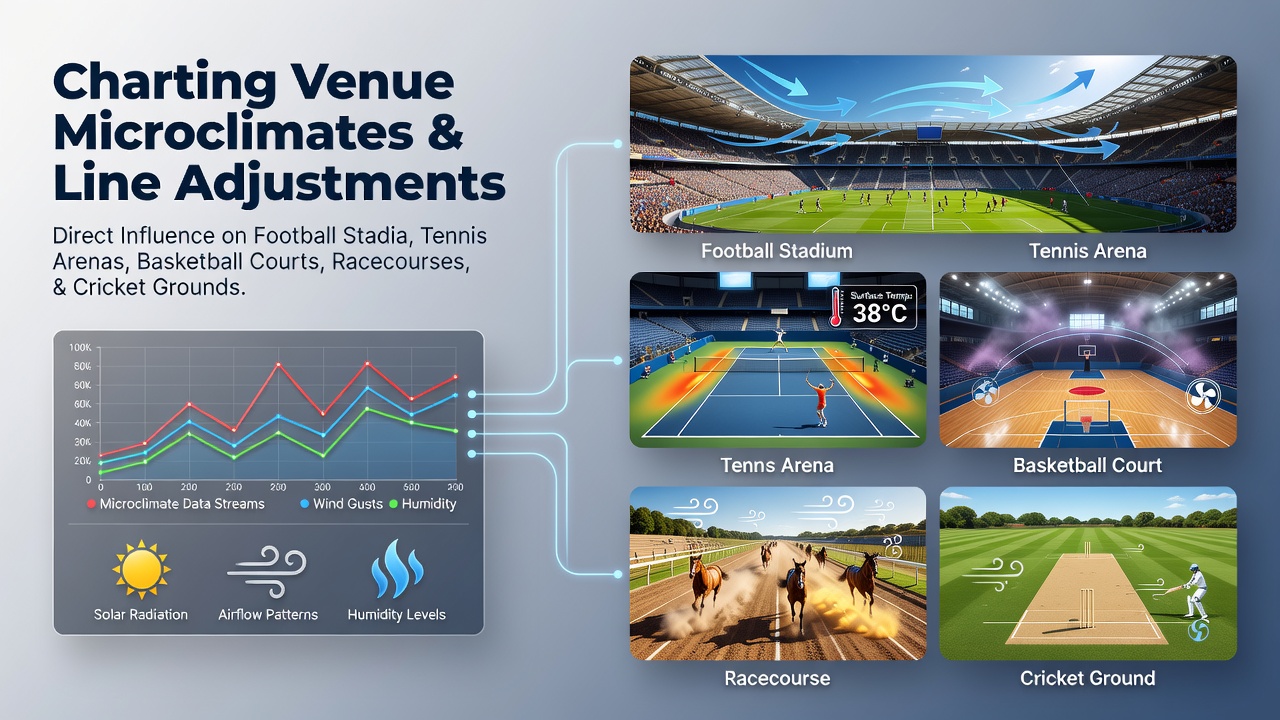
Charting Venue Microclimates and Their Direct Influence on Line Adjustments in Football Stadia, Tennis Arenas, Basketball Courts, Racecourses, and Cricket Grounds
Venue microclimates form through interactions between local architecture, surrounding terrain, and prevailing weather patterns, and these conditions prompt measurable shifts in how bookmakers adjust lines across multiple sports. Data collected from embedded sensors at major facilities reveal that temperature gradients, humidity pockets, and wind corridors alter playing surfaces and athlete performance metrics, which in turn feed directly into pre-match and in-play line recalibrations.
Football Stadia and Pitch-Level Microclimates
Enclosed or partially roofed football stadia often trap heat near the pitch while upper stands remain cooler, creating vertical temperature layers that affect ball trajectory and player endurance. Studies from European facilities document how these gradients accelerate grass drying on one side of the field during afternoon fixtures, leading oddsmakers to move totals lines when surface friction data exceeds historical thresholds. Observers note that June 2026 fixtures scheduled in northern latitudes showed accelerated line movements when sensor arrays recorded dew-point spreads exceeding 4 degrees Celsius between touchlines.
Tennis Arenas and Court-Surface Conditions
Tennis courts inside large arenas experience rapid humidity spikes when retractable roofs close during changing weather, and these shifts modify ball bounce heights by measurable percentages according to International Tennis Federation surface testing protocols. Line setters respond by widening or narrowing game totals when relative humidity crosses venue-specific benchmarks that correlate with extended rally lengths. Data from Australian hard-court venues indicate that afternoon microclimate inversions, where cooler air pools at court level, have prompted repeated adjustments to set handicap markets within the first thirty minutes of play.
Basketball Courts and Indoor Air Dynamics
Basketball arenas maintain tightly controlled environments yet still develop localized microclimates around the court due to HVAC placement and spectator density. Research published by sports engineering groups shows that slight increases in court-level humidity slow ball grip and alter shooting percentages, prompting real-time revisions to player prop lines. Facilities in humid subtropical regions record more frequent adjustments during evening games when external moisture infiltrates through loading docks and concourses, altering the statistical baselines used by oddsmakers.
Racecourses and Track-Surface Variability
Racecourses span open landscapes where microclimates develop along different sections of the track because of elevation changes, tree lines, and prevailing winds. Ground temperature differentials of only two degrees Celsius between the back straight and home turn have been shown to influence stride lengths and finishing times according to records maintained by national racing authorities. Line compilers therefore monitor these gradients closely and shift place and win market lines when sensor data diverges from seasonal averages, particularly during late spring meetings when solar heating creates pronounced thermal boundaries.
Cricket Grounds and Boundary Microclimates
Cricket grounds present elongated microclimates because outfields extend across large areas with varying sun exposure and drainage patterns. Bowlers and batters encounter different swing and seam conditions when wind channels form between stands, and these variations produce statistically significant changes in scoring rates that feed into over/under line calculations. Meteorological arrays installed at Test match venues have captured humidity drops near the pitch during early afternoon sessions that correlate with increased wicket-taking deliveries, prompting rapid revisions to match totals and individual bowler performance markets.
Integrated Monitoring Systems and Data Integration
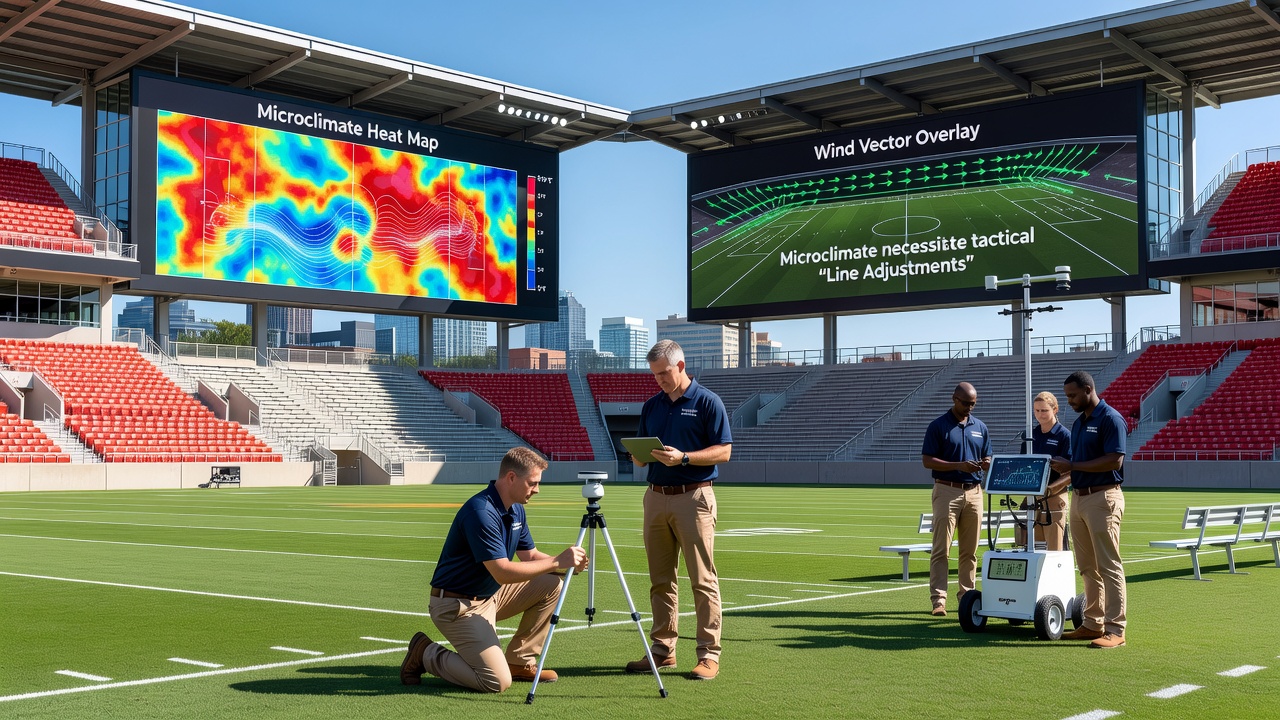
Modern venues combine multiple sensor networks to feed continuous microclimate readings into centralized databases used by both groundskeepers and betting operators. Temperature, wind, and moisture readings update every sixty seconds during events, allowing algorithms to flag when conditions cross established thresholds that historically precede performance deviations. Regulatory bodies such as those overseeing sports integrity in North America and the European Union require transparent documentation of how environmental data influences market movements, ensuring that line adjustments remain tied to verifiable measurements rather than speculation.
Conclusion
Venue microclimates exert quantifiable effects on playing conditions across football, tennis, basketball, horse racing, and cricket, adn these effects translate into systematic line adjustments when operators incorporate real-time sensor data. Continued expansion of monitoring networks and improved modeling techniques will likely refine the precision of such adjustments as facilities collect longer datasets through 2026 and beyond.