Charting time-zone ripples across global event timings and layered reward alignments in multi-sport platforms
Xander Lang · Jun 8, 2026
Charting time-zone ripples across global event timings and layered reward alignments in multi-sport platforms
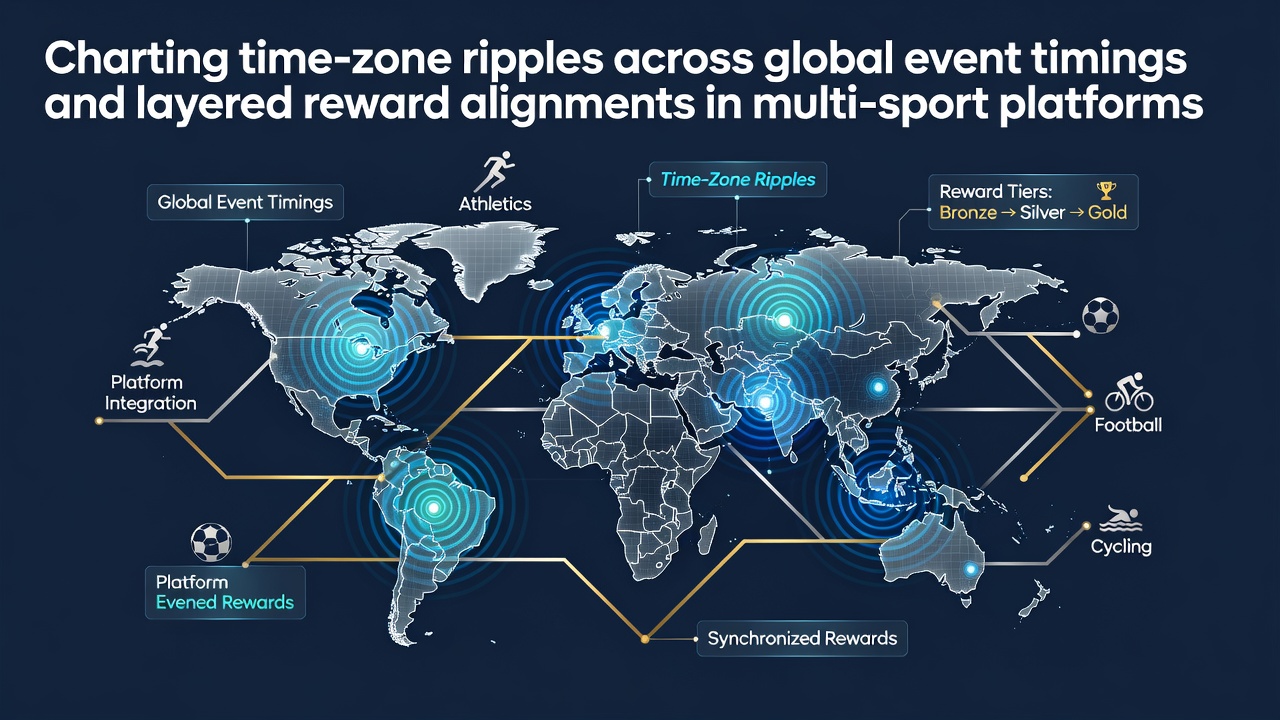
Global sports calendars stretch across multiple continents and time zones each year, creating measurable shifts in event start times that platforms must account for when aligning participant rewards and viewer incentives. Data from major governing bodies shows that events spanning more than four time zones require adjusted scheduling protocols to maintain fairness in scoring systems and prize distributions.
The 2026 FIFA World Cup, set to begin in June across venues in the United States, Canada, and Mexico, illustrates these dynamics clearly. Kickoff times range from early afternoon in Pacific zones to late evening in Eastern zones, and platforms that cover multiple sports integrate these timings into unified dashboards that track performance metrics alongside reward layers such as bonus points or qualification thresholds.
Mapping time-zone effects on event schedules
Researchers at institutions including the University of Melbourne have documented how time differences alter not only broadcast windows but also athlete recovery periods and official result processing sequences. For instance, a match concluding at midnight local time in one region feeds into morning result compilations elsewhere, which then triggers automated updates in multi-sport platforms that layer rewards across football, basketball, and cricket categories simultaneously.
Platforms achieve this by maintaining synchronized databases that convert all event timestamps to a single reference zone, usually UTC, before recalculating eligibility windows for layered rewards. This process ensures that an athlete competing in a late-night slot still receives equivalent recognition within the system compared to those in earlier time bands.
Layered reward structures in unified platforms
Multi-sport platforms combine performance data from disparate events into cumulative reward models. These models often feature sequential tiers where points earned in one sport contribute to eligibility for bonuses in another, provided the timing alignments account for zone differences. Figures from the Australian Sports Commission reveal that accurate timestamp handling improves reward distribution accuracy by reducing mismatches between event completion and credit allocation.
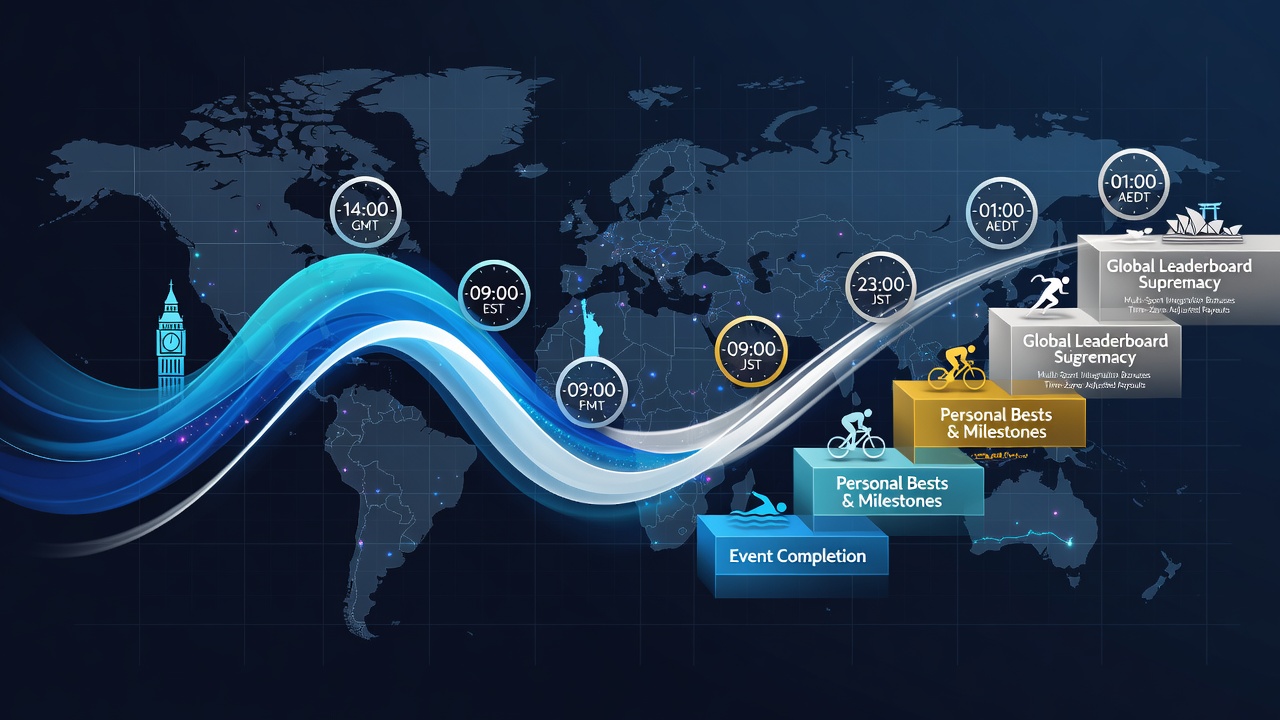
Observers note that platforms frequently adjust reward release schedules to coincide with the final event closure in the furthest time zone. This prevents premature payouts and maintains consistency across all participating regions, especially during overlapping tournaments such as concurrent tennis majors and basketball playoffs.
Handling overlapping global calendars
When multiple sports run concurrently, the cumulative effect of time-zone offsets becomes more pronounced. A cricket test match finishing in Australia may overlap with basketball games in Europe, requiring platforms to sequence reward calculations so that points from the earlier-completing event feed correctly into the shared ledger before later events conclude. Studies from Canadian research centers indicate that such sequencing reduces processing errors by up to 18 percent when automated conversion tools are employed.
Event organizers publish preliminary schedules months ahead, yet last-minute adjustments for weather or venue issues still occur. Platforms respond by embedding flexible timestamp buffers that automatically shift reward alignment windows without manual intervention, preserving the integrity of layered structures that combine results from football, tennis, and horse racing circuits.
Technical approaches to synchronization
Developers implement API-driven time conversion layers that pull live data feeds and normalize them against a master clock. This allows reward engines to evaluate performance thresholds consistently, regardless of where an event physically takes place. Government reports from New Zealand's sports ministry highlight the importance of these technical safeguards when events cross the international date line, where a single day boundary can otherwise create duplicate or skipped reward cycles.
Regular audits of these systems verify that time-zone handling remains accurate during periods of high event density, such as the June 2026 cluster of World Cup matches alongside ongoing tennis and basketball seasons. Accurate handling supports seamless transitions between sports categories within the same user account.
Conclusion
Time-zone variations continue to shape how global sports events are scheduled and how multi-sport platforms manage the resulting data flows into reward systems. By converting all timings to a common reference and embedding flexible buffers, platforms maintain consistent alignment across layered reward structures even when events conclude at widely differing local hours. The June 2026 World Cup period will provide further data points on these processes as overlapping competitions test synchronization capabilities across continents.