Charting Payout Discrepancies Across Rugby League Fixtures and Darts Championship Legs Through Layered Platform Incentives
Freya Hansen · May 18, 2026
Charting Payout Discrepancies Across Rugby League Fixtures and Darts Championship Legs Through Layered Platform Incentives
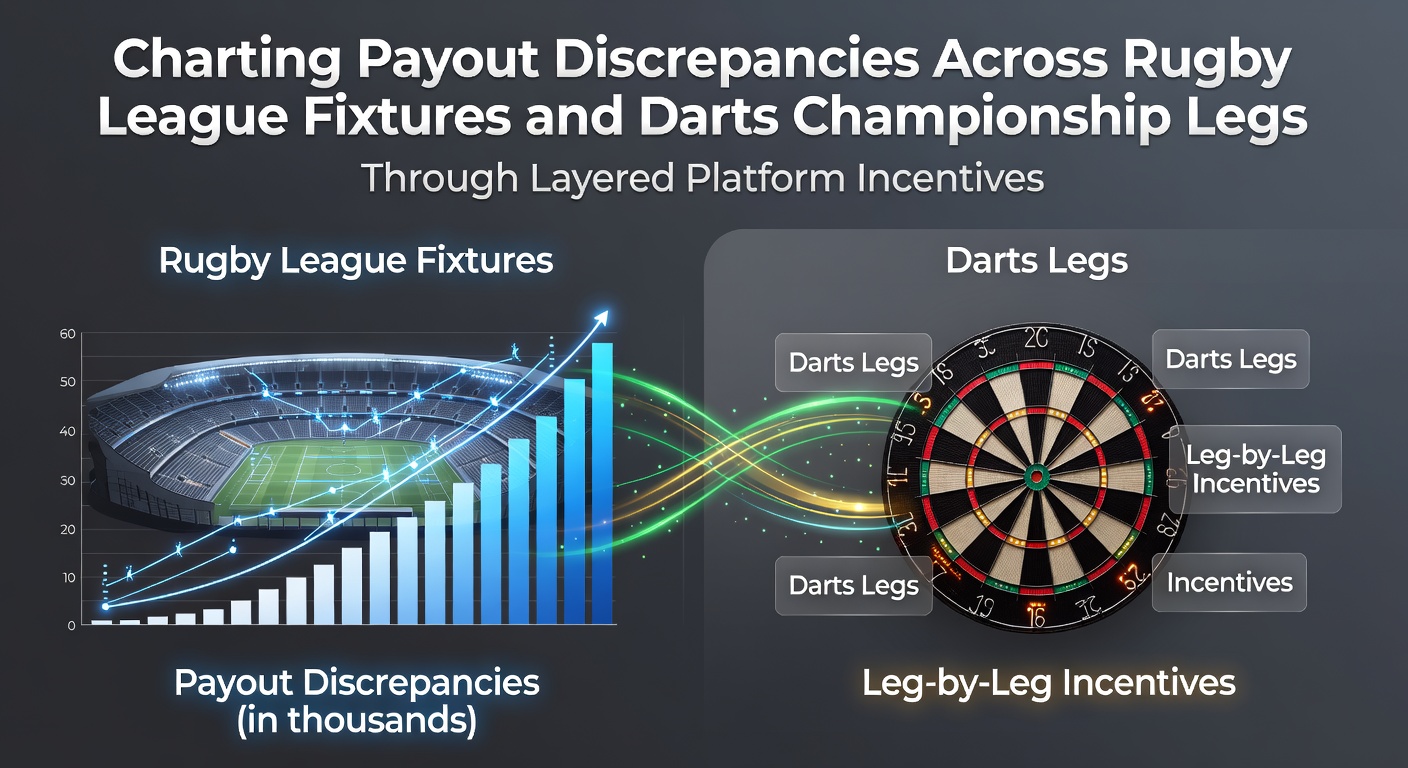
Platform operators structure incentives in distinct layers that include deposit matches, cashback tiers, and performance-based multipliers, which create measurable differences in final payouts for rugby league and darts events. Observers note these layers interact differently depending on sport-specific rules and fixture schedules, so bettors encounter varying net returns even when starting odds appear similar across operators. Rugby league fixtures often feature extended match durations and scoring bursts that trigger bonus thresholds at different points in a season. In May 2026 several NRL rounds coincide with Super League midweek games, prompting operators to apply temporary rebate ladders that reward volume on specific team totals. Those who study these patterns find payout gaps widen when one platform caps its highest rebate tier at five percent while another extends it to eight percent for the same fixture window. Darts championship legs operate on shorter, high-volume formats where each leg resolves quickly and accumulators build across multiple sessions. Layered incentives here frequently include leg-count bonuses and checkout multipliers that reset daily. Researchers tracking PDC events during the same May period report that operators offering progressive leg incentives produce higher effective returns on exact-score markets than those limiting bonuses to overall tournament stages.Layer Structures in Rugby League Markets
Operators combine initial deposit rewards with ongoing cashback programs and occasional fixture-specific boosts. These elements stack so a standard accumulator on match totals receives an added percentage when total points exceed a preset line. Data indicates the stacking order matters because some platforms credit the cashback before applying the multiplier while others reverse that sequence, which alters the final credited amount by several percentage points on larger stakes.
Fixture timing influences availability because operators adjust active promotions around high-attendance rounds or international tests. One study of historical payout records revealed that discrepancies reached their widest margins during double-header weekends when operators competed for volume by extending cashback windows. Bettors comparing two platforms on identical selections sometimes receive returns that differ by more than the posted odds variation alone would predict.
Incentive Interactions in Darts Championship Legs
Darts events generate frequent micro-markets on individual legs and checkout combinations, which allows operators to layer small per-leg incentives on top of broader tournament rewards. When a platform applies a checkout bonus only after a minimum number of legs, the payout calculation shifts compared with platforms that credit smaller amounts immediately. Figures from recent championship cycles show these timing differences compound across an evening session of eight or nine matches.
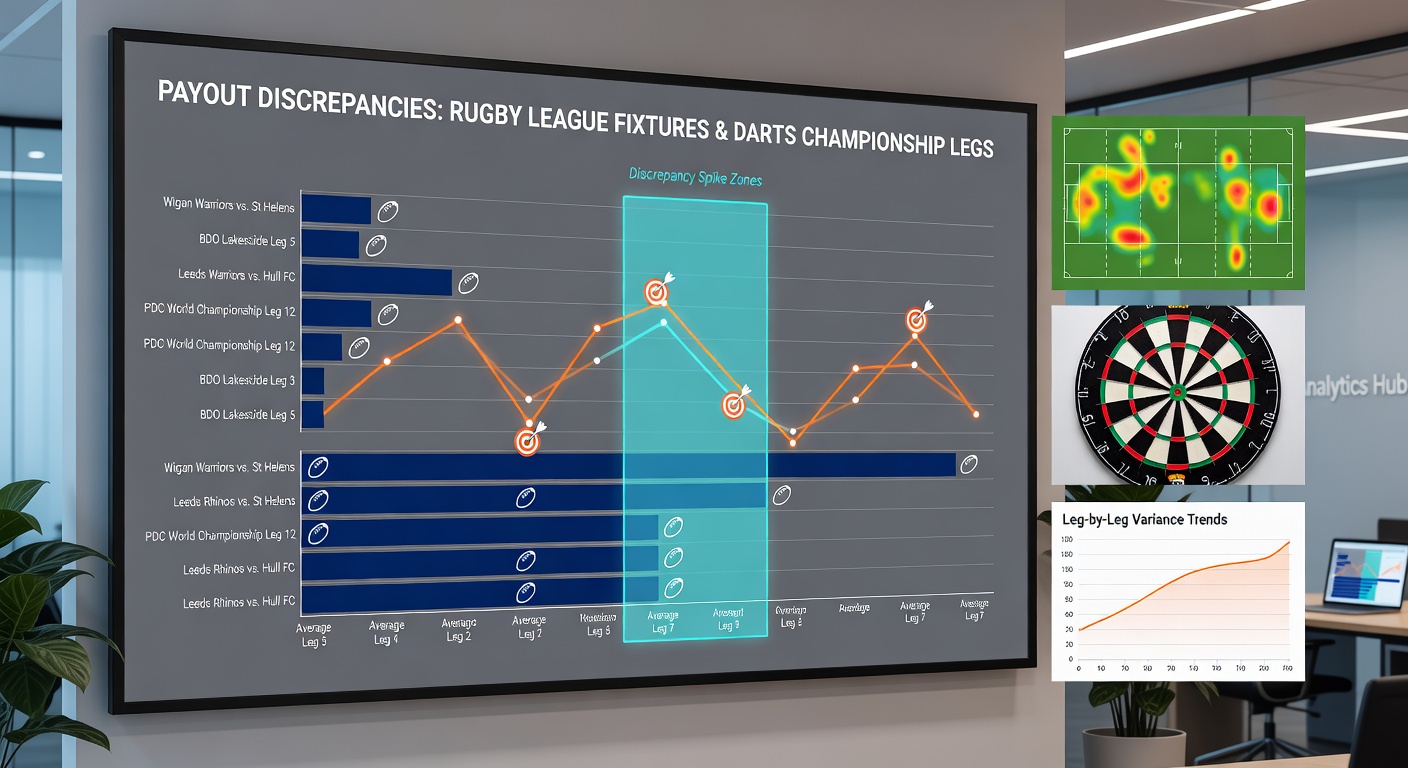
Championship scheduling also affects which layers remain active. During the May 2026 European Tour swing, several operators introduced temporary leg-accumulation multipliers that reset each evening, while others maintained flat cashback across the entire week. Those tracking results across platforms observed that the reset structure produced steadier incremental gains on longer sessions whereas flat structures favored shorter, high-stake selections.
Comparative Discrepancy Patterns
Side-by-side analysis of equivalent selections in rugby league and darts highlights how sport mechanics interact with incentive layers. Rugby league markets often involve broader outcome ranges, so volume-based cashback contributes a larger share of the final payout. Darts markets, with their rapid resolution, allow leg-specific multipliers to dominate the calculation. The result is that identical incentive percentages generate different effective yields depending on whether the underlying event favors volume or precision.
Regulatory reports from the Australian Institute of Criminology note that transparent disclosure of layer order helps reduce unexpected shortfalls, yet platform variations persist across jurisdictions. Industry data from the National Council on Problem Gambling further illustrates how regional operators apply different maximum thresholds, which widens cross-border payout gaps for the same rugby league or darts selection.
Conclusion
Platform incentive layers continue to shape payout outcomes across rugby league fixtures and darts championship legs, with timing, stacking order, and sport-specific mechanics driving measurable differences. Observers monitoring May 2026 schedules see these patterns repeat as operators refine promotions to match fixture density and event formats. Continued comparison of active terms across platforms supplies the clearest picture of where discrepancies concentrate and how they evolve with each new round or leg sequence.